How Interviewers Compare Two Similar Fresher Candidates
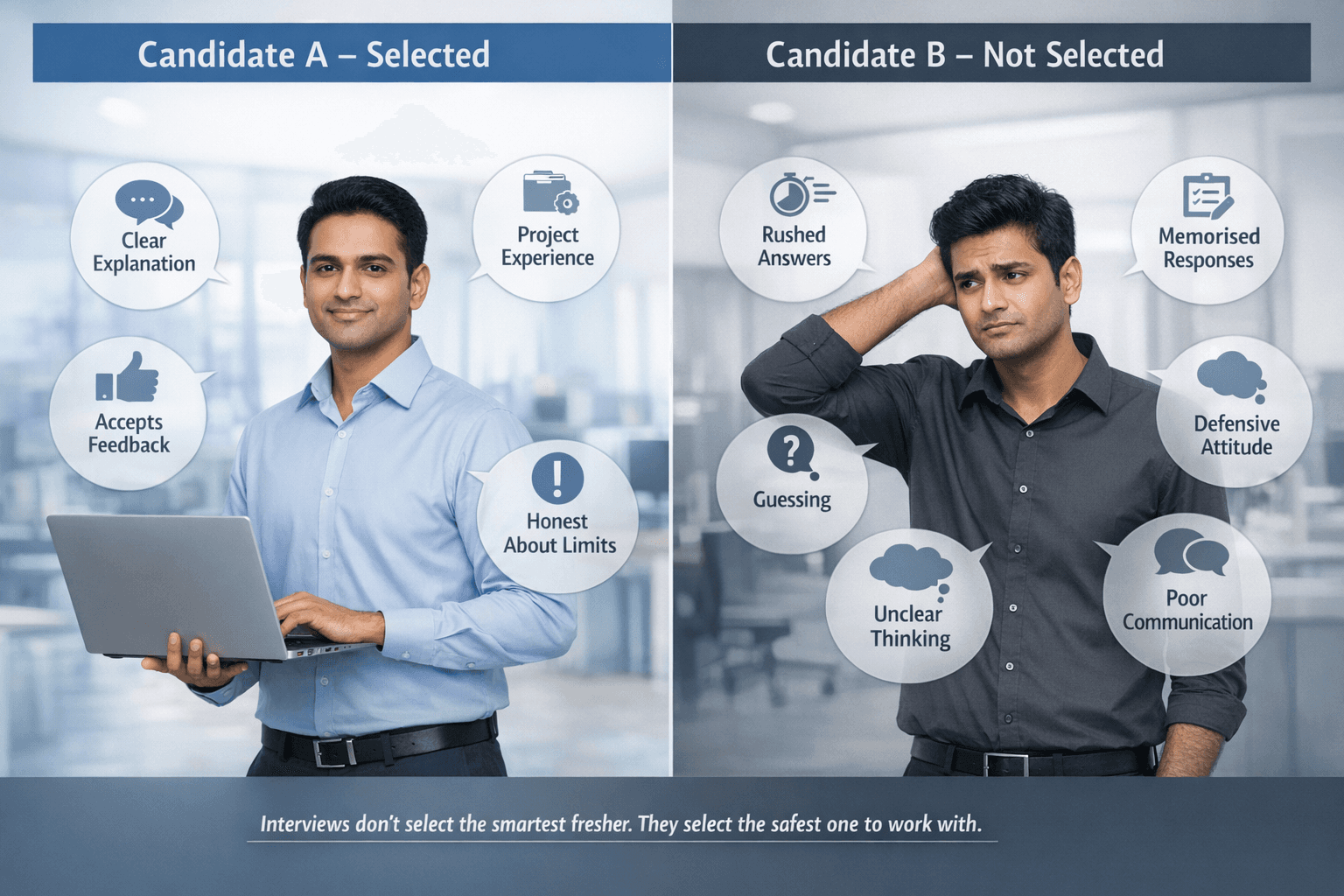
This happens more often than freshers realize.
Two candidates.
Same degree.
Similar technical scores.
Same college tier.
Only one offer.
At this stage, interviewers are no longer asking “Who knows more?”
Rather they are more interested in recruiting “Who feels safer to hire?”
Here’s how that comparison actually works—without sugarcoating.
1. Who Explains Better, Not Who Knows More
When two candidates give similar answers, interviewers look at clarity.
The candidate who:
explains step by step
uses simple language
stays calm while thinking
wins over the candidate who:
jumps to conclusions
uses jargon
gives rushed or scattered answers
Clear thinking is easier to trust than raw speed.

2. Who Shows Real Experience vs Memorised Answers
Interviewers can usually tell who has used concepts and who has only studied them.
They compare:
real project examples
ability to explain mistakes
comfort with follow-up questions
The candidate who can say “This failed, and here’s how I fixed it” almost always ranks higher.
3. Who Feels Easier to Work With
This is critical and often invisible to candidates.
Interviewers silently ask:
Would I like this person on my team?
Will they ask sensible questions?
Will they accept feedback?
The calmer, more respectful, more self-aware candidate usually wins—even if both are equally skilled.
4. Who Is Honest About Limits
When faced with an unfamiliar question, interviewers watch reactions closely.
Candidate A: guesses confidently but incorrectly.
Candidate B: admits they don’t know and explains how they’d learn.
Candidate B is usually rated higher.
Honesty reduces risk. Bluffing increases it.
5. Who Shows Learning Ability, Not Ego
Freshers are hired to learn, not to impress.
Interviewers prefer candidates who:
listen carefully
adjust after hints
improve during the interview
Someone who refuses hints or insists they’re right often drops in ranking.
6. Who Communicates Like a Professional
Small things matter when candidates are otherwise equal:
eye contact (or steady focus in virtual interviews)
structured answers
respectful tone
patience while listening
These signals suggest workplace maturity.
7. Who Gives Confidence, Not Doubt
At the final comparison, interviewers ask a simple question internally:
“If I assign this person a task tomorrow, will it get done without chaos?”
The candidate who inspires confidence—through communication, attitude, and approach—gets the offer.
The Real Reality Check
When skills are similar, behavior decides.
Interviewers don’t choose the smartest fresher.
They choose the one who feels:
dependable
teachable
steady under pressure
That’s the difference between rejection and selection.
One-Line Takeaway
When two freshers look equal on paper, the offer goes to the one who feels safer to work with.
Join WhatsApp Groups for Job Updates
Group 1: CLICK HERE> https://chat.whatsapp.com/KCxEwu33GbvEgwiE82BPhO
📢 Don’t forget to forward this message to your friends and help them kick-start their careers