How to Become Employable Without Experience: A Practical Guide for IT Freshers in India
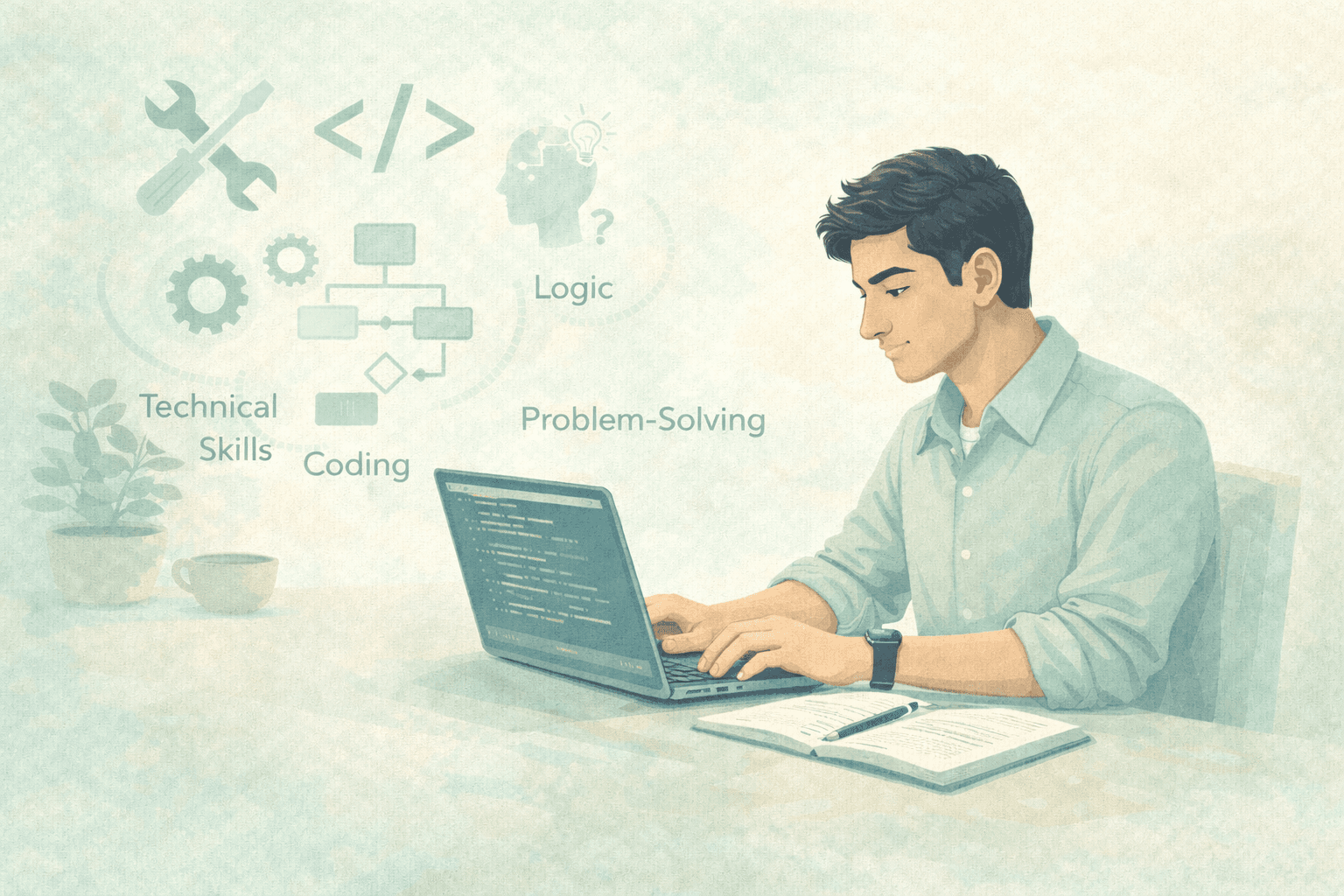
“No Experience” Is Not the Real Problem
Many IT freshers believe they are rejected because they don’t have experience. In reality, most entry-level roles do not expect prior job experience. What employers actually look for is employability — proof that you can learn, apply skills, and contribute with minimal hand-holding.
Whether through campus drives or off-campus applications, fresher IT positions in India receive thousands of resumes. With limited time to evaluate each profile, recruiters filter candidates based on practical skills and preparedness, not just the degree listed on paper..
This article explains how you can become employable even without formal experience, using realistic, proven steps that align with how Indian IT companies actually hire.
Experience vs Employability: Understand the Difference
In hiring, experience signals past employment—but employability signals present capability.
For fresher hiring, companies focus on employability signals such as:
Can you write basic working code?
Can you understand requirements and explain your approach?
Can you learn tools quickly?
Can you work with existing systems?
This is why many freshers with internships or projects get shortlisted, while others with only certificates do not.
How Resume Shortlisting Actually Works (Reality Check)
Most fresher resumes go through automated screening systems or quick recruiter scans. These systems look for keywords and evidence, not promises.
A resume saying:
“Completed online course in Python”
Is weaker than:
“Built a Python-based expense tracker with login, database storage, and reports”
Employability is judged by what you have built, used, or solved, not what you have watched or completed.
Step 1: Build Skill Proof Through Real Projects
Projects are the strongest substitute for experience.
Good fresher projects:
Solve a simple real-world problem
Use commonly used tools
Are explained clearly in your resume
Examples:
A basic CRUD web application
A simple REST API with authentication
A small data analysis dashboard
A test automation script
A cloud deployment of a demo app
You don’t need complex systems. Recruiters prefer clear, working basics over fancy but incomplete ideas.
Step 2: Use GitHub as Your Work Record
In the absence of experience, your GitHub profile becomes your work history.
What matters:
Clean folder structure
Meaningful commit messages
README explaining what the project does
Screenshots or usage steps
Even simple projects, when well-documented, show:
Discipline
Understanding
Ownership
Many recruiters check GitHub links during shortlisting — especially for off-campus hiring.
Step 3: Learn Skills That Are Actually Used at Work
Focus on job-relevant basics, not advanced theory.
Core employability skills for freshers:
One programming language (Python / Java / JavaScript)
SQL basics
Git fundamentals
Debugging and reading error logs
Basic API concepts
Simple deployment understanding
These skills help freshers start contributing faster, which is highly valued in real projects.
Step 4: Internships, Freelancing, and Open Work Count
Paid or unpaid, structured or informal — learning-by-doing matters.
Valid experience substitutes include:
Academic internships
Remote internships
Small freelance tasks
Open-source contributions
College project extensions
Even a 4–8 week hands-on role shows:
You worked with deadlines
You followed instructions
You delivered something usable
Mention what you did, not just where you worked.
Step 5: Hackathons and Challenges Show Practical Thinking
Hackathons are not about winning. They show:
Problem understanding
Team collaboration
Basic design thinking
Ability to build under pressure
Recruiters view hackathons as applied learning, especially when you can explain:
The problem
Your role
The solution approach
This is far stronger than theoretical knowledge alone.
Step 6: Make Your Resume Fresher-Friendly and ATS-Safe
Avoid long paragraphs and vague statements.
Good fresher resume structure:
Skills section with tools and basics
Projects section with 2–4 strong projects
Clear role description (what you did)
Clean formatting and readable keywords
Avoid:
Listing too many technologies
Writing “expert” without proof
Copy-paste project descriptions
Your resume should answer one question:
“Can this candidate start learning and contributing from day one?”
Step 7: Use LinkedIn Strategically (Not Randomly)
LinkedIn works when used professionally.
Effective actions:
Clear headline with skills
Project links in profile
Short, polite outreach messages
Sharing learning progress occasionally
This increases visibility and sometimes leads to referrals or interview calls.
Checklist: Becoming Employable Without Experience
Before applying, ask yourself:
✅ Do I have at least 2 real projects?
✅ Can I explain my code clearly?
✅ Is my resume keyword-friendly?
✅ Do I understand basics of Git and SQL?
✅ Can I talk confidently about what I built?
If yes, you are employable — even without experience.
FAQs
Is certification enough to get a job?
Certifications help, but employers value applied skills more than certificates alone.
Do companies expect freshers to know everything?
No. They expect strong basics, willingness to learn, and problem-solving ability.
Can non-paid work be shown as experience?
Yes, if you clearly explain what you worked on and learned.
Final Thought
You don’t need experience to become employable — you need proof of skills, practical exposure, and clarity. Focus on building, practicing, and showcasing real work. That is what turns a fresher into a hire-ready candidate.
Join WhatsApp Groups for More Updates
Group 1: CLICK HERE> https://chat.whatsapp.com/KCxEwu33GbvEgwiE82BPhO
📢 Don’t forget to forward this message to your friends and help them kick-start their careers