Aptitude vs Coding: What Matters More in IT Hiring?
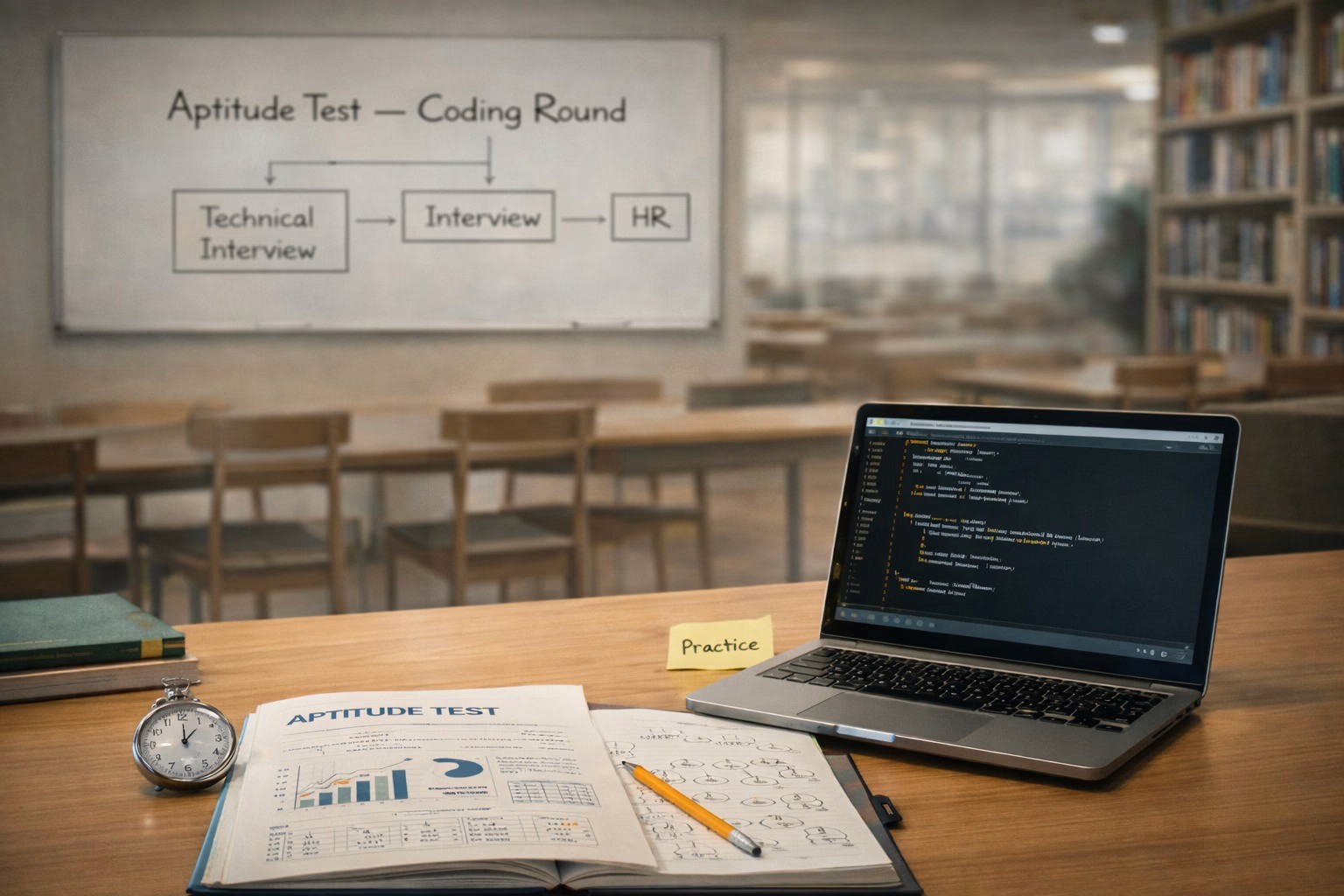
Aptitude vs Coding: What Matters More in IT Hiring?
For Indian IT freshers, one question causes constant confusion during placement preparation:
Should I focus more on aptitude or on coding?
Some students spend months solving quantitative aptitude questions, while others jump straight into coding platforms and ignore aptitude altogether. When results don’t go as expected, then it becomes frustrating.
The reality is more balanced than most people admit. In the Indian IT hiring ecosystem—especially campus hiring—both aptitude and coding matter, but they matter at different stages and in different ways. Understanding this difference can help freshers prepare smarter and reduce unnecessary stress.
This article explains how aptitude and coding are actually used in hiring, how expectations differ between service and product companies, and how freshers should prepare realistically.
Understanding the Indian IT Hiring Process (Ground Reality)
Most IT hiring in India, especially freshers—follows a filter-based process. Each stage removes candidates until a manageable number remains.
Typically, the stages are:
Online aptitude test
Technical or coding assessment
Interviews (technical + HR)
Aptitude and coding don’t replace each other—they serve different purposes at different stages of hiring.
What Aptitude Tests Really Measure
Aptitude tests in Indian IT hiring usually include:
Quantitative aptitude (math, percentages, ratios)
Logical reasoning (patterns, sequences, puzzles)
Verbal ability (basic comprehension and grammar)
Why companies use aptitude tests
For service companies and campus drives with thousands of applicants, aptitude tests are a scaling tool. They help companies:
Quickly shortlist candidates
Assess basic problem-solving ability
Check attention, speed, and accuracy
Ensure candidates can handle structured thinking
Aptitude tests do not measure job skills directly, but they indicate whether a fresher can:
Understand instructions
Think logically under time pressure
Handle structured tasks—something common in IT projects
This is why aptitude tests are almost always the first elimination round, especially in mass hiring.

What Coding Tests Actually Measure
Coding tests usually evaluate:
Basic programming logic
Understanding of one language (Python, Java, C++, etc.)
Problem-solving ability
Sometimes basic data structures
In many campus tests, the coding level is fundamental—logic and clarity matter more than complexity.
They focus on:
Loops, conditions, functions
Arrays, strings, simple logic
Writing correct and readable code
Why coding matters
Coding shows whether a fresher can:
Convert logic into working solutions
Think step-by-step
Debug simple issues
Apply fundamentals to real problems
While aptitude helps you enter the pipeline, coding determines:
Whether you move to technical roles
The kind of team or project you get
Long-term growth potential
Service Companies vs Product Companies: Different Weightage
Service-Based Companies
Examples include large IT services firms and system integrators.
Aptitude weightage: High (especially early rounds)
Coding depth: Basic to moderate
Goal: Hire trainable candidates at scale
For these companies:
Aptitude often decides shortlisting
Coding ensures you can survive training and projects
Strong fundamentals matter more than advanced skills
Product Companies
Product companies and startups operate differently.
Aptitude weightage: Lower or indirect
Coding depth: High
Goal: Hire contributors who can deliver quickly
Here:
Coding tests are more challenging
Problem-solving ability matters more than speed
Aptitude is indirectly tested through coding questions
So the right strategy depends on whether you’re aiming for service-based roles or product-based roles.
The Common Myth: “Only One Matters”
Many freshers believe:
“Aptitude is useless once you know coding”
“Coding doesn’t matter if you clear aptitude”
“Good coders always get hired”
These points sound true, but they don’t reflect the full hiring reality.
Reality check:
Aptitude often decides whether your resume even gets noticed
Coding decides what role you are trusted with
Ignoring either reduces opportunities
In practice, freshers who cover both aptitude and coding reduce their elimination risk in early and technical rounds.
How Recruiters Actually Evaluate Freshers
For entry-level roles, companies look for readiness and fundamentals—not mastery. They look for:
Basic logical clarity
Consistency in thinking
Willingness to learn
Ability to explain solutions
A fresher who solves problems slowly but correctly often performs better in interviews than someone who memorized solutions without understanding.
Interviews usually confirm what aptitude and coding already indicated:
Can you explain your thinking?
Do you understand basics?
Can you learn on the job?
Mistakes Freshers Commonly Make
Over-focusing on only one area
Many candidates spend months on coding while failing aptitude cut-offs, or vice versaTreating aptitude as “non-technical”
Logical reasoning and problem-solving are core IT skills, not unrelated hurdles.Memorizing coding patterns
Recruiters easily detect copied or memorized solutions.Ignoring explanation skills
Even correct answers lose value if you cannot explain your logic.Chasing difficulty instead of clarity
Advanced topics without strong basics create confusion and fear.
A Realistic Preparation Balance for Freshers
A practical approach for most Indian freshers is:
40–50% aptitude preparation
50–60% coding fundamentals
This balance helps you:
Clear shortlisting rounds
Perform confidently in technical assessments
Avoid last-minute panic
Regular practice beats occasional long sessions—consistency is what builds confidence.
Final Perspective: What Matters More?
The honest answer is simple: Aptitude opens the door, but coding decides how far you go inside.
Neither replaces the other.
For Indian IT freshers, especially in campus hiring:
Aptitude opens doors
Coding determines how far you go
Interviews validate both
A Reassuring Note for Struggling Freshers
If you are unemployed or feeling stuck, it does not mean you lack ability. It usually means your preparation is unbalanced, not inadequate.
Both aptitude and coding are learnable skills. Improvement comes from:
Regular practice
Understanding mistakes
Staying patient with progress
IT careers in India are rarely decided in one test or one year. They are built gradually. With a balanced focus and steady effort, opportunities continue to open—sometimes slower than expected, but steadily.
What matters most is not choosing between aptitude and coding, but learning how both fit into the hiring reality.
Join WhatsApp Groups for Job Updates
Group 1: CLICK HERE> https://chat.whatsapp.com/KCxEwu33GbvEgwiE82BPhO
📢 Don’t forget to forward this message to your friends and help them kick-start their careers