What Recruiters Check in a Fresher Resume in Just 10 Seconds
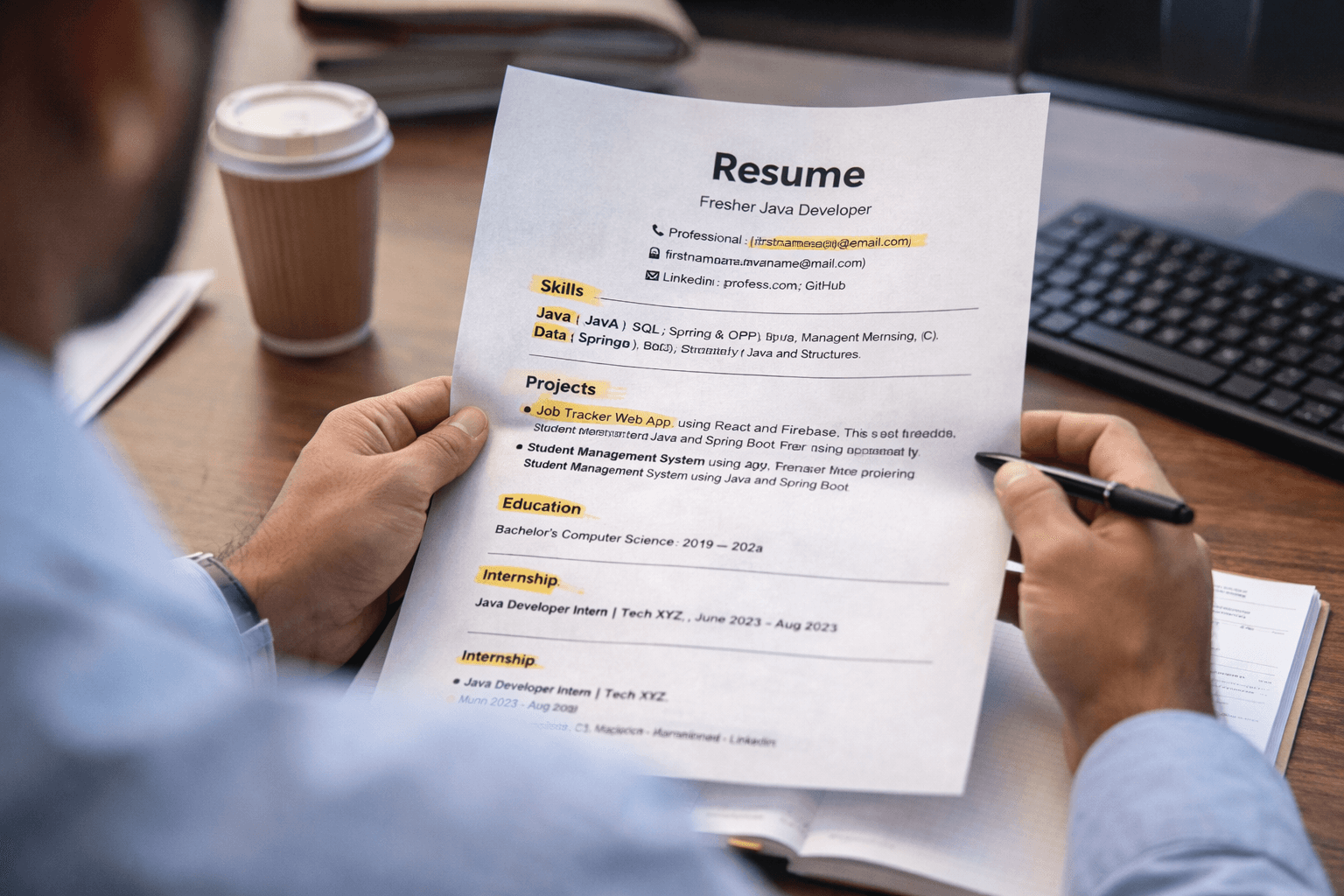
Many freshers spend days creating a resume.
They write every detail, add many skills, include long paragraphs, and fill the resume with everything they have done.
But after applying to many jobs, they still don’t get calls.
Then they start thinking:
“My skills are good, why am I not getting shortlisted?”
“I applied everywhere, still no response.”
“Maybe companies are not hiring.”
The truth is:
✅ Most recruiters don’t read a fresher resume fully at first.
They scan it quickly.
In many cases, recruiters take only 10 seconds to decide:
Should I shortlist this resume?
Or should I reject it?
This is not because recruiters are rude.
It happens because:
they receive hundreds of resumes daily
they have limited time
they shortlist quickly based on first impression
So if your resume is not clear, strong, and well-structured, it may get rejected even if you have good skills.
This article explains exactly what recruiters check in a fresher resume in just 10 seconds and how you can improve your resume to increase your chances of shortlisting.
Why Recruiters Spend Only 10 Seconds on a Resume
Recruiters are not technical experts in most cases.
Their job is to shortlist quickly.
A recruiter may receive:
200 applications
500 applications
sometimes 1000 applications
So they cannot read every resume line by line.
Instead, they scan resumes for key signals.
That’s why your resume must be designed for quick scanning.
What Recruiters Check in a Fresher Resume in Just 10 Seconds
Now let’s break it down clearly.
1) Your Name, Location, and Contact Details
This is the first thing recruiters see.
Recruiters check:
Is your name clearly visible?
Is your phone number correct?
Is your email professional?
Is your location mentioned?
Many freshers make mistakes like:
using unprofessional email IDs
missing phone number
writing incorrect details
no LinkedIn or GitHub
A professional email looks like:
✅ firstname.lastname@gmail.com
Not like:
❌ cutie123@gmail.com
❌ kingcoder@gmail.com
These small things affect first impression.
2) Resume Layout and Clean Formatting
Before reading content, recruiters notice the resume design.
They check:
Is it clean?
Is it easy to scan?
Is it one page?
Is it structured properly?
If your resume is:
messy
full of paragraphs
too many colors
inconsistent fonts
hard to read
Then recruiters may reject it quickly.
For freshers, a clean one-page resume is best.
3) Your Job Role or Resume Headline
Recruiters want clarity.
They check:
What role is this candidate applying for?
If your resume does not show a clear direction, recruiters get confused.
Example of a good headline:
✅ “Java Developer | Fresher”
✅ “Frontend Developer | React | Fresher”
✅ “Data Analyst | SQL + Power BI | Fresher”
Bad headline examples:
❌ “Looking for a job in IT”
❌ “Software Engineer” (without skills proof)
❌ No headline at all
A clear role headline increases shortlisting chances.
4) Your Skills Section (This Is Very Important)
Recruiters scan the skills section quickly.
They check:
Do you have the required skills for the job?
Are the skills relevant?
Are the skills believable?
Many freshers make a big mistake here.
They write 20–30 skills like:
Java, Python, C++, HTML, CSS, JavaScript, React, Node, MongoDB, AWS, DevOps, AI, ML…
This looks fake.
Recruiters prefer:
✅ 6–10 strong, relevant skills
instead of
❌ 25 random skills
Your skills should match your target role.
5) Projects (Biggest Section for Freshers)
For freshers, projects are more important than experience.
Recruiters check:
Do you have real projects?
Are they relevant to the job?
Are they described clearly?
If your resume has no projects, it becomes weak.
Even if you are a fresher, projects show that:
you can apply your skills
you have practical knowledge
you are serious about the field
Recruiters don’t want just “learning”.
Recruiters want proof.
6) Internship or Training (If Available)
If you have internship experience, recruiters will notice it quickly.
They check:
was it real?
was it relevant?
what did you do there?
Even a small internship can increase resume strength.
But if you don’t have internship, don’t worry.
Strong projects can cover that gap.
7) Education (Only the Basics)
Recruiters check education quickly.
They check:
degree
branch
college name
year of passing
They usually don’t focus too much on marks unless the company has strict criteria.
Many freshers think education is everything.
But in IT hiring, skills and projects matter more.
8) GitHub, Portfolio, and LinkedIn
This is a strong shortlisting factor.
Recruiters check:
do you have GitHub?
do you have a portfolio website?
do you have LinkedIn?
If you have GitHub and your projects are uploaded properly, it creates trust.
It shows:
real work
consistency
seriousness
Even if your resume is simple, a strong GitHub profile can impress recruiters.
9) Keywords That Match the Job Description
Recruiters often use ATS systems (Applicant Tracking Systems).
So they check:
does your resume match job keywords?
Example:
If job asks for:
Java
SQL
OOP
Spring Boot
And your resume contains:
Java, SQL, OOP, Spring Boot
Then your resume gets shortlisted more easily.
That’s why customizing resume for each job is important.
10) Mistakes and Red Flags
Recruiters also quickly check for red flags like:
spelling mistakes
grammar mistakes
too many pages
fake certifications
fake experience
unclear projects
too much unnecessary information
Even small mistakes can reduce trust.
Recruiters think:
“If this candidate cannot write a clean resume, how will they work professionally?”
The Perfect Fresher Resume Structure (Recruiter-Friendly)
A simple resume structure that recruiters love:
Name + contact details
Role headline
Skills (technical + tools)
Projects (2–3 strong projects)
Internship / training (if any)
Education
Certifications (only relevant ones)
Achievements (optional)
Extra activities (optional)
This structure is clean and easy to scan.
How to Make Your Resume Stronger (Step-by-Step)
Step 1: Keep It One Page
For freshers, 1 page is enough.
One page looks professional and easy to read.
Step 2: Use Simple Formatting
Avoid:
too many colors
tables
heavy designs
Use:
clear headings
proper spacing
consistent font
bullet points for projects
Step 3: Add Strong Projects
Projects are the biggest value for freshers.
Add:
project name
tools used
2–3 features
your contribution
Example:
✅ “Built a Job Tracker Web App using React and Firebase with features like login, saved applications, and status tracking.”
This looks strong.
Step 4: Add GitHub Links
If your GitHub has projects, add it.
This increases recruiter trust.
Step 5: Customize Resume for Each Job
Do not apply with the same resume everywhere.
Change:
skills order
project order
keywords
This improves shortlisting chances.